




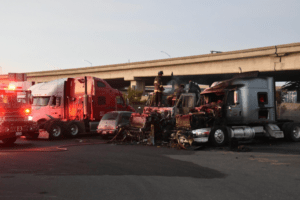
When a commercial truck collides with another vehicle, the damage is rarely minor. These are massive machines, often weighing 80,000 pounds or more, and the injuries they cause can be life-changing. Proving what happened — and who was responsible — is not always straightforward.
That is where black box data comes in.
Modern commercial trucks are equipped with electronic devices that record everything happening inside and around the vehicle. These devices capture speed, braking, engine activity, and driver hours — often in the seconds before a crash. This data can tell a story that no eyewitness can fully describe.
But here is the catch: that data does not last forever. It can be overwritten, corrupted, or deliberately destroyed if the right steps are not taken quickly.
Understanding what black box data in truck accident cases can reveal — and why time is not on your side — is the first step toward building a strong legal claim. If you or someone you love was seriously hurt in a truck crash, knowing how this evidence works could make all the difference.
What Is a Black Box in a Commercial Truck?
Most people associate black boxes with airplanes. But commercial trucks have had similar technology for years. In the trucking industry, the term “black box” typically refers to two specific devices: an Event Data Recorder (EDR) and an Electronic Logging Device (ELD).
These are not the same thing, though they often work together to paint a complete picture of what a truck was doing before, during, and after a crash.
The EDR is similar to an airplane’s flight recorder. It captures real-time mechanical and operational data. The ELD, on the other hand, tracks hours of service — how long the driver was behind the wheel without rest.
Together, these devices generate data that no driver or company can easily explain away. In black box data truck accident cases, this combined record is often the single most powerful piece of evidence available to injured victims.
What Data Gets Recorded?
The amount of information stored in these devices surprises most people. Both EDRs and ELDs capture a wide range of data points that are directly relevant to determining fault in a crash.
Here is a breakdown of what each device typically records:
| Device | Data Recorded |
| Event Data Recorder (EDR) | Vehicle speed, brake application, throttle position, engine RPM, seatbelt status, airbag deployment |
| Electronic Logging Device (ELD) | Hours of service, driving time, rest periods, GPS location, engine on/off cycles |
This data is not just helpful — it is specific. An EDR can show exactly how fast the truck was going three seconds before impact. An ELD can reveal whether a driver was on the road for 14 hours straight, in violation of federal safety regulations.
When you combine both records, you get a timeline of events that is hard to argue with in court.
Why Black Box Data Is So Valuable in Litigation
Black box data in truck accident litigation carries enormous weight because it is objective. Unlike eyewitness testimony, it does not fade over time or get influenced by emotion or memory. The data is recorded automatically, without any human input, after the fact.
This makes it extremely difficult for a defense attorney to dismiss or discredit.
Here are the key reasons black box evidence stands out in court:
- It captures events in real time, not in hindsight
- It is generated by the truck’s own systems — not by the plaintiff
- It can directly contradict a truck driver’s account of the crash
- It may reveal violations of federal Hours of Service regulations
- It can show whether the driver attempted to brake before impact
- It documents mechanical issues that the company may have known about
In many cases, black box data is the difference between a disputed claim and a clear-cut finding of liability. For victims dealing with serious injuries and mounting medical bills, that clarity can directly affect how much compensation they recover.
The Preservation Problem: Why You Must Act Fast
Here is one of the most urgent realities in black-box data truck accident cases: the data does not remain on the device indefinitely.
Most EDRs store data in a loop. Once the storage is full, older data gets overwritten by new data. Depending on the device, this cycle can happen within days or weeks of a crash. If no one steps in to preserve the data, it may simply be gone.
| Timeline After Crash | Risk to Black Box Data |
| 0–24 hours | Data still intact but vulnerable to overwriting |
| 24–72 hours | High risk if truck returns to service |
| 1–2 weeks | Significant chance data has been overwritten |
| Beyond 30 days | Very likely lost unless legal hold was issued early |
On top of overwriting, there is the risk of deliberate destruction. Trucking companies know what this data might show. Some have been known to wipe devices or claim the data was “unavailable” when litigation begins.
This is exactly why getting legal help immediately after a truck accident is not just advisable — it is essential.

How Attorneys Demand Preservation of Evidence
One of the first things a truck accident attorney should do after being retained is send a legal hold letter, also called a spoliation letter, to the trucking company. This letter formally demands that the company preserve all evidence related to the crash, including black box data.
This matters for several reasons:
- It puts the trucking company on official notice that litigation is likely.
- It creates a legal obligation to preserve the data immediately.
- If the company destroys evidence after receiving this letter, courts can impose serious sanctions.
- It can result in an “adverse inference” — meaning a judge or jury may be told to assume the missing data would have supported your claim.
- It stops the clock on routine data overwriting practices.
Trucking companies often have experienced legal teams working for them from the moment an accident happens. Victims who wait too long may find that critical evidence has already disappeared. Moving quickly with experienced legal representation is the only reliable way to protect this evidence.
Working With Accident Reconstruction Experts
Raw data from an EDR or ELD is not something most jurors can interpret on their own. Numbers showing engine RPM, throttle input, and GPS coordinates mean very little without expert analysis.
This is where accident reconstruction specialists become essential. These experts take raw black-box data and translate it into a clear, visual account of what happened.
H&P Law works alongside accident reconstruction experts and industry specialists to transform raw data into courtroom-ready proof. These professionals can:
- Calculate the exact speed of the truck at the time of impact
- Determine whether the driver attempted to brake or swerve
- Identify whether the truck was operating outside safe mechanical limits
- Map the vehicle’s route and compare it to the driver’s own account
- Establish a precise timeline of events leading up to the collision
When this expert analysis is presented alongside the black box data, it becomes extremely difficult for a defense team to argue that the accident was caused by the victim. The numbers do not lie, and a qualified expert knows how to make those numbers speak clearly to a jury.
Common Ways Black Box Data Establishes Liability
In truck accident cases, liability often hinges on whether the driver or the company acted negligently. Black box data can expose negligence in ways that are hard to deny.
Driver Negligence
Driver negligence is one of the most common issues uncovered through EDR and ELD data. Speed violations are clear — if the truck was traveling well above the posted limit before the crash, the data will confirm it.
Fatigue is another major factor. Federal regulations strictly limit the number of hours a commercial truck driver can operate a vehicle before taking a mandatory rest period. ELD data can show exactly how long the driver had been on the road. If those records show a violation of Hours of Service rules, it becomes strong evidence that the company failed to enforce safe practices.
Hard braking events, sudden acceleration, and failure to slow in construction zones or poor weather can all appear in the EDR record. Each of these details adds another layer to the picture of what caused the crash.
Trucking Company Negligence
Trucking companies carry their own share of responsibility when accidents occur. Black box data can reveal whether a company was pushing drivers to meet unrealistic delivery schedules, which often results in fatigue-related crashes.
EDR data may also show evidence of mechanical failure — engine problems, brake issues, or transmission faults that the company knew about or should have discovered through routine maintenance. If the data shows a recurring mechanical problem that was never addressed, the company’s failure to act becomes a direct cause of the accident.
This is why H&P Law looks beyond just the driver’s actions when building a truck accident claim. Trucking companies are often the deeper pockets—and the larger sources of negligence—in these cases.
Other Electronic Evidence That Supports Your Case
Black box data is a powerful starting point, but it rarely works alone. Several other forms of electronic and physical evidence can reinforce what the EDR and ELD records show.
- Dashcam footage from the truck’s front or rear cameras
- GPS tracking records from the trucking company’s dispatch system
- Cell phone records showing distraction at the time of the crash
- Maintenance logs and inspection reports are stored electronically
- Communication records between drivers and dispatchers
- Weigh station records and border crossing logs
Each of these additional sources can confirm the black box data, fill in gaps, or add entirely new evidence of negligence. An experienced legal team knows to request everything, not just the EDR file.
Take the Next Step Toward Justice
Truck accident cases are not like typical car accident claims. They involve federal regulations, multiple potentially liable parties, and evidence that can disappear within days of a crash. The trucking company’s legal team begins protecting its interests immediately — and so should you.
H&P Law is an award-winning personal injury firm based in Las Vegas with over 60 years of combined legal experience handling complex truck accident cases. Led by partners Marjorie Hauf and Matthew Pfau, the firm moves quickly to demand preservation of black box data and build a case that holds negligent drivers and trucking companies accountable.
If you or someone you love was seriously injured in a truck accident in Las Vegas, Henderson, or anywhere in Nevada, do not wait. Contact H&P Law today for a FREE, confidential consultation. Call (702) 598-4529 and take the first step toward the compensation you deserve.
H&P Law handles truck accident cases on a contingency fee basis — you pay nothing unless we recover compensation for you. Results may vary depending on the specific facts and legal circumstances of each case.